- Hot Dip Galvanizing
- Wednesday, 21 April 2021
Hot dip galvanizing: an excellent example of circular economy
Today, with Bottaro wire, there is one more reason to consider galvanization a better and more ecological process than painting
We all know by now: the sustainable revolution is underway. Every sector of the economy, like it or not, is involved and the world of galvanizing is no different. Suffice it to say that hot-dip galvanizing in series is now widely used especially in construction, infrastructure and manufacturing, but also in street furniture, agriculture, transport, public utility services and for individual fastening elements.
EGGA, the European association of galvanizers, provides us with data and numbers that speak for themselves: every year there are 8 million tons of steel products subjected to hot dip galvanizing. There are 700 galvanizing plants in Europe alone. We are talking about small and medium-sized companies that, in providing employment and social value to their reference territory, are engaged every day in galvanization processes, which can be applied to literally everything: from the smallest of screws to large structural beams. Even more than 20 meters long. These are data that demonstrate how a simple choice on how to coat and protect steel products can have a huge impact on the global environment.
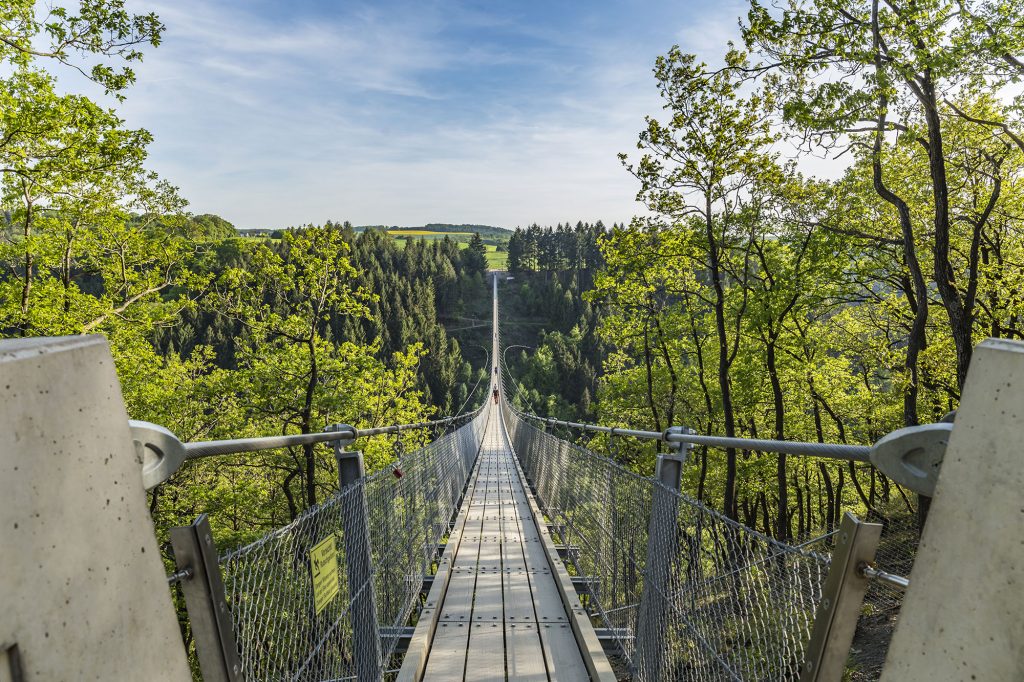
The great works of the future will be galvanized
Considering the wide spectrum of use and the many sectors in which hot dip galvanizing is involved, which also constitute the backbone of any economy, it becomes essential, with a view to greater responsibility for a more ecological future, to make the process of galvanization of steel more sustainable in the long term.
This explains why builders are changing their own way of thinking and approaching the subject, starting to design more flexible and adaptable buildings that can provide not only basic functions for a longer period of time, but that take also consider any new functions and future new users. In short, today we try to design a building starting from components that are reusable and from resources that have a positive residual value.
And this also explains why it is becoming increasingly evident that the great works of the future will be galvanized. All this, necessarily, will take place at the expense of the more classic alternative to galvanization: painting.
What is zinc and why it is essential for protecting steel
Zinc is a natural metal found in the Earth’s crust, renowned for its exceptional ability to protect steel from corrosion. Its electrochemical properties make it a so-called “sacrificial metal”: when applied to steel, it creates a physical barrier against atmospheric agents while also providing active cathodic protection. This means that even if scratches or minor abrasions occur, zinc continues to protect the underlying steel, preventing oxidation.
Beyond its technical performance, zinc is a fully recyclable material that can be reused without any loss of quality, a key factor in its central role within circular economy models adopted across Europe and worldwide.
Hot-dip galvanizing: how the process work
Hot-dip galvanizing is a protective treatment for steel consisting of immersing the manufactured item in a bath of molten zinc at approximately 450 °C. The process takes place in several stages, each essential to ensuring a uniform, highly resistant coating:
- Surface preparation
The steel is degreased, pickled, and then fluxed to remove impurities, oxides, and residues that could compromise the adhesion of the zinc coating. - Immersion in molten zinc
Once prepared, the component is immersed in the molten zinc bath. At this point, a true metallurgical reaction occurs: zinc and iron bond to form a series of extremely strong intermetallic layers. - Cooling and final inspection
The item is withdrawn, cooled, and inspected to verify that the coating is uniform and free from defects.
The result is long-lasting protection, with corrosion resistance that in many cases exceeds 50 years. For this reason, hot-dip galvanizing is considered the most reliable solution for infrastructures, buildings, transport systems, and all applications requiring durability over time.
Types of galvanizing
Although hot-dip galvanizing is the most durable and widely used method, several zinc-based protective techniques exist. The main ones are:
Hot-Dip Galvanizing
The most effective method. Full immersion ensures continuous coverage, strong metallurgical bonding, and maximum protection even in aggressive environments.
Electro-Galvanizing
In this process, zinc is deposited onto steel using an electric current. The coating is thinner and more uniform but far less corrosion-resistant than hot-dip galvanizing. It is mainly used in the automotive industry and for precision components.
Thermal Spray Zinc
Molten zinc is sprayed onto the surface. It provides good protection and can be applied locally, but it does not offer the same durability as hot-dip galvanizing because no metallurgical bond is formed with the steel.
Mechanical Plating
A cold process used for small components such as screws and bolts. It produces thin coatings suitable for hardware and small parts, but not designed for structural or highly exposed applications.
Among all these alternatives, hot-dip galvanizing remains the most robust, sustainable, and cost-effective solution in terms of product life cycle.
Why hot-dip galvanizing is a model of circular economy
Hot-dip galvanizing is regarded as a benchmark of circular economy for several reasons:
- Zinc is 100 % recyclable and can be reused endlessly.
- The coating lasts for decades, drastically reducing maintenance and replacement needs.
- The process generates minimal waste, and any zinc residues are recovered and reintegrated into the production cycle.
- Longer-lasting structures mean lower resource consumption over time.
Within this framework, every detail of the supply chain — including the choice of tying wire — contributes to the overall efficiency of the process.
The role of tying wire in hot-dip galvanizing: why it makes the difference
During hot-dip galvanizing, steel components must be securely tied and handled. The wire used has a direct impact on:
- zinc consumption,
- operator safety,
- stability of the pieces during immersion,
- final coating quality.
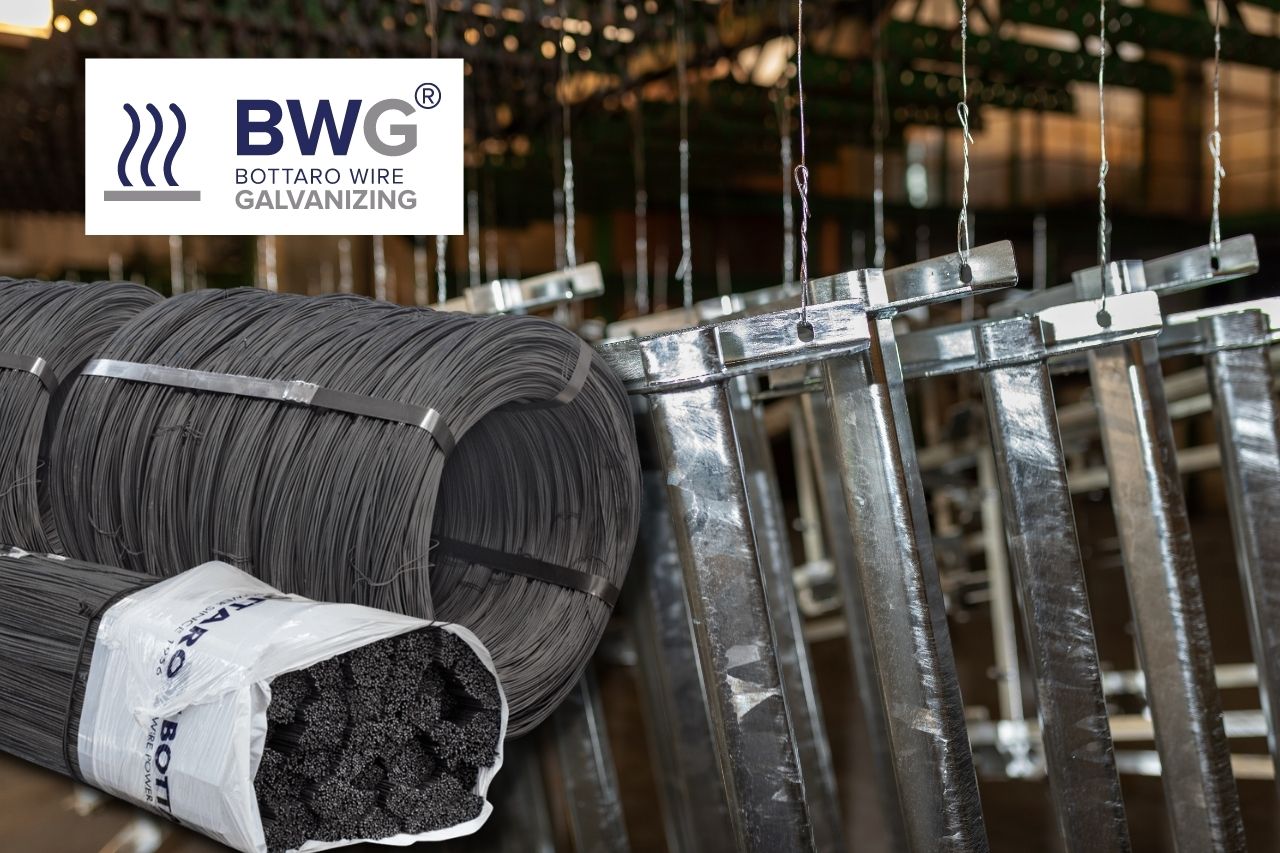
A specialized wire such as BWG™, designed with an optimized diameter and low zinc absorption, helps reduce waste, improve bath management, and enhance plant safety. It’s a technical detail that has a tangible impact on both production efficiency and the sustainability of the entire process.
Hot dip galvanizing VS painting: why the first is more sustainable
But then one wonders what zinc offers more than paint when coating steel, in terms of sustainability and therefore thinking from a circular economy perspective.
Well, it is the real characteristics of galvanized steel, its durability, its strength and its adaptability, which make it preferable to painting, precisely in terms of the recyclability of metal structures and components.
The reasons, in reality, are many: they range from the greater protection offered by hot-dip galvanizing against corrosion and against climate and temperature changes, to the lesser maintenance required on the steel structure of a component. To these advantages is added the possibility of reusing the galvanized coating for several cycles, precisely by virtue of its being closely linked to steel. This allows the product to be reused together with its original coating without the need to re-coat it.
Integrating the reuse cycles in the already consolidated steel recycling processes therefore means returning the zinc, without any loss of properties, to the zinc production plants and re-inserting it, if necessary, in a new galvanizing process, thus avoiding significant waste of raw material.
Bottaro’s contribution to the sustainable zinc supply chain
Hot dip galvanizing therefore has all the credentials to be a perfect example of the application of circular economy to industry. But to make a circular economy truly effective and sustainable, the good will of a single company that decides to implement these precautions is not enough: it is in fact necessary to think like a supply chain, so that the whole sector follows a virtuous line and philosophy, made up of shared controls and protocols.
Bottaro, as a supplier of wire for the members of the EGGA association, is inevitably an integral and essential part of this important supply chain. Its contribution, for a more sustainable supply chain, derives from the fact that its hot-dip galvanizing wire is more ecological, because it has been designed to absorb less zinc and, consequently, to consume even less during the galvanizing phase of the steel.
With the Bottaro wire, the zinc sustainability circle closes perfectly.
© Copyright Bottaro Mario S.r.l. - All rights reserved